


Read this and weep...
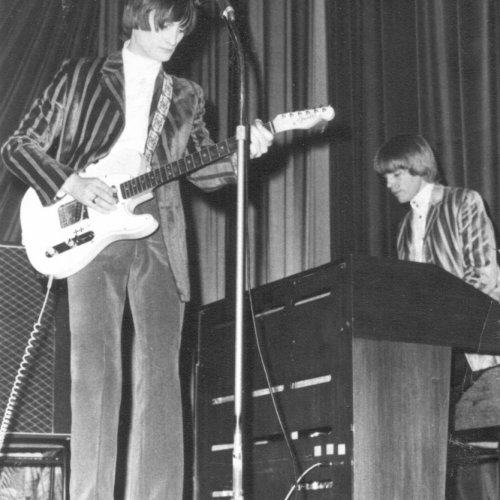
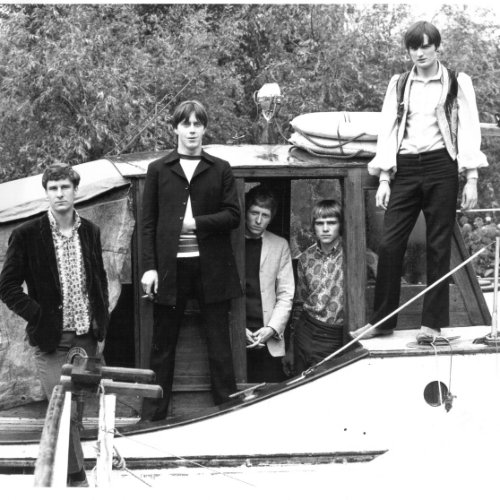
Active as Gentle Influence from the latter half of 1968 its five members had previously played together in a five piece blue-eyed soul band called the Steam Machine. Steam Machine grew out of an Oxfordshire beat/soul group called The Newlanders. With future Influence members Martin Hester and Jeff Arundell in their ranks, The Newlanders entered a Melody Maker beat contest in Brighton late 1966 competing against Mud, The Roll Movement and The Eyes of Blue amongst others. Sadly, owing to the late arrival of their organist Jackie Haines, their chances of procuring any honours were wrecked. Jackie was soon ousted in favour of Simon Needler who was in the audience at the competition and known to the band. Mark Pawley was enrolled at the same time as lead guitarist. Simon and Mark had previously played in a Faringdon band called The Heretics. During the mid-sixties The Heretics had gigged with The Who at the Marquee and recorded a demo at the club’s studio, though no records were actually released. The Newlanders had also recorded for a private label in 1966 and the record was engineered by Colin Saunders who went on to build up a healthy and renowned music business called Solid State Logic. In 1967 The Newlanders rejigged themselves as the Steam Machine and by early 1968 the seven piece had dropped their brass section in favour of a more conventional beat group styled quintet comprising Simon Needler (Hammond Organ), Mark Pawley (lead guitar), Martin Hester (lead vocalist) Jeff Arundell (bass guitar) and Austrian born drummer George Schwyzer. Gigging in and around their home base of Witney the musical palette of the Steam Machine was for a time radically revamped to incorporate a repertoire bearing a strong resemblance to the extended voluminous sets of the American band Vanilla Fudge. The formula proved too far-out for the native audience. Consequently, the band toned things down somewhat but it still had a stronger progressive sound than that of the original Steam Machine. Martin Hester’s inherently soulish vocal tones gave their music a zest akin to say that of the Phil Sawyer-led Spencer Davis Group. The Steam Machine was rebranded as The George Street Ideal and the band were spotted by Jill Harnett whose ambition to manage a group, together with husband Rodney, was realised when the emergent Gentle Influence agreed to be taken under their wing. Shortly after this alliance had been struck, the band was booked into Jackson Studios in Rickmansworth to record a demo to be touted around the major record companies, and a session was duly undertaken in the summer of 1968. Already eminent within the ranks of the The George Street Ideal as the combined principal tunesmiths, Mark and Simon penned the two numbers that were recorded for an audition acetate. And it was these – ‘Captain Reale’ and ‘Easy To Know’ – which were initially offered to Decca. Notorious for rejecting almost as much talent as they actually signed [The Beatles and the Mike Stuart Span can be cited as two extremes of Decca disapproval], the company declined to take on The George Street Ideal and as a consequence the Harnett’s next chosen port of call was Pye Records. Rodney Harnett presented Pye’s John Schroeder with a copy of the acetate wrapped in a very professional promotional package, a file and synopsis of the band that was so expertly assembled that Pye didn’t actually sign the quintet straight away, as they thought with such paperwork to hand The George Street Ideal was already on their books! As for that Jackson Studios acetate, only one copy is known to have survived but unfortunately it’s in a pretty shocking state, the disc’s most pertinent damage the result of its being gnawed by a dog that patently wasn’t a George Street Ideal fan. ‘Easy To Know’ in particular jumps like a cat on a hot tin roof but, underneath the canine vandalism, one can make out a less polished but nevertheless excellent pre- emptive version of the track that graced the flipside of their debut 45, whilst ‘Captain Reale’ is similarly praiseworthy and a solid blueprint for its re-recording a year later. Though Pye had taken the band on they were less than enamoured with the group’s name and demanded it be changed. However, the next suggestion of The Influence, and subsequently Gentle Influence, met with similar caution. Rodney Harnett had suggested Gentle Influence and so under the supervision of John Schroeder the band were in Studio A in Pye’s Marble Arch studios in the autumn of 1968 recording tracks from which a single would be extracted. Simon recalls four numbers being committed to tape including a new rendition of ‘Easy to know’ but it was the pop ballad ‘Never Trust In Tomorrow’, written by Schroeder and Anthony King [who wrote ‘Technicolour Dreams’ for the Status Quo], that was earmarked as the A side. Thus ‘Never Trust In Tomorrow’ and ‘Easy To Know’ were released in January 1969 as the Gentle Influence’s debut single and incidentally, on both the finished demo and stock copies, it was King only who figured as the sole composer on the top side. A bouncy slice of brass filled pop, ‘Never Trust In Tomorrow’ is nonetheless overshadowed by ‘Easy To Know’, a brilliant serving of irresistible up tempo beat with a highly effective marrying of brass and hammond organ, some neat guitar frills and a powerful lead vocal execution, all bursting out of an arrangement that differed slightly both lyrically and structurally from the original Jackson Studios version. Despite being selected by Luxembourg DJ David Christian as his Hit of the week ‘Never Trust In Tomorrow’ failed to get off the ground, which was exacerbated by a lack of live promotion by the band through Rodney Harnett’s curious decision to keep them rehearsing [in the cellar at the White Hart pub in Barnes] and holding them back from any form of major gig schedule until a hit was finally secured. With an obligation to regularly broadcast live music, the BBC was always looking for radio friendly artists to fulfil the criteria, even those who were hardly household names or had yet to score a hit record. With bands like The Bystanders, Episode Six, Harmony Grass and Jigsaw persistently employed to air bright and breezy pop on predominantly daytime programmes, it was unsurprising that the Gentle Influence’s analogous musical palette would find favour with the Beeb’s selection panel, and the quintet did indeed pass a BBC audition in early 1969. The band subsequently recorded several sessions for broadcast on weekday morning and afternoon shows such as Sounds like Tony Brandon and The Dave Cash Programme but of the cache of performances taped for these shows, only two are known to survive and are presented on an LP and CD Shapes And Sounds. Aired on The Jimmy Young Show in early May the ballad ‘Always Be A Part Of My Living’ was a live preview of the band’s next single though lacking orchestration of the 45 rendition, the radio version arguably having more body and immediacy than it’s vinyl counterpart. The real bonus however is the group’s take on the Impressions ‘You’ve Been Cheating’, an energetic and bubbling performance that explores similar territory to ‘Easy To Know’ and was exclusive to BBC radio. Other tracks recorded solely for BBC by Gentle Influence included Brand New Baby, Back in the USSR and Jim Webb’s ‘Carpet Man’ a choice cover for many British harmony pop bands such as the Nocturnes and the Orange bicycle. The single version of Guy Fletcher and Doug Flett’s ‘Always Be A Part Of My Living’ was recorded in Studios A and B at Marble Arch in the spring of 1969 and its coupling - a revisiting of the psychedelically scented pop delight ‘Captain Reale’ - was taped during the same sessions. Amongst the original choices mooted for the second A side was ‘Green Light’, a track previously issued on the Pye label by Youngblood, and indeed it was their version presented to the group. Eventually, the powers that be opted for ‘Always be a part of my Living’ as a more realistic hit parade prospect. Issued in June, it received poor plugging on the part of Pye and the band themselves felt that labelmates like Consortium were being given better promotion, so it was obviously up to the Gentle Influence and their management to advertise their wares by their own efforts. Thus a remarkable publicity stunt was engineered which entailed the quintet going to Buckingham Palace to present Princess Anne with a lamb for her birthday but the trip didn’t really pay them any dividends; the intended idea of the group getting arrested after running behind the sheep once it had escaped from the palace was scuppered when the animal decided it wasn’t into moving too much that day. Once the rest of the band had dispersed the lamb was left in the care of Martin and Jeff, the former putting the animal in the back of his Mini. This however had not passed unnoticed and members of the Metropolitan Police promptly got Martin out of the car and enquired why he had a lamb in his car. Not exactly convinced by his line that it was a pet the Police informed Martin that he hadn’t a licence to carry livestock and asked him to present his documents at a Police Station forthwith. That night on the way back to Witney one Farmer’s flock was blessed with an extra unexpected offspring. Later in 1969, Gentle Influence were erroneously included in the publicised lineup for a concert to take place at Wembley Stadium at the end of a charity Oxfam walk. Nobody really knows how this happened but Rodney took advantage of the situation and threatened legal action if the band was not allowed to play. The concert took place on the sunny Sunday afternoon of 13th July 1969. Gentle Influence opened the concert and were followed by an illustrious succession of 60s’ hit bands: Love Affair, Status Quo, Alan Price, Grapefruit, Yes, Gun, Jimmy James and the Vagabonds and Don Partridge. The bands used the platform above what was known as the Flame Tunnel as a stage and all of the amplification was provided by WEM (Watkins Electrical Music). Prior to the concert starting, seeing that the goalposts were still in situ, somebody produced a football and all of the band, along with many others, took turns to score a goal at Wembley! Though the Gentle Influence survived the 60s, they eventually began to fall apart. Jill Harnett’s suggestion and subsequent enforcement of a policy [admittedly with the group’s slightly hesitant compliance] for them to become a predominantly pure pop band to increase their chances of fame and fortune had sowed the seeds of unrest, and the constant rehearsing rather than regular gigging had merely compounded the situation. Therefore in 1970 the Gentle Influence decided to call it a day but the story didn’t end there. The contract between Rodney Harnett and the group stipulated that he owned the group name and that each member was contracted personally to him. Rodney decided that he would continue to submit Gentle Influence for BBC sessions he would rechristen one of his other groups [Mahogany Guiness] as Gentle Influence and get Martin Hester to sing with them. Martin pulled out at the eleventh hour however and the idea was abandoned. Not content, Rodney enthused about another manouvre to keep Gentle Influence afloat. After convincing an Italian producer that the band was ideal for his native audiences a final lineup featured Martin Simon and Jeff plus two members of Mahogany Guiness. They recorded two numbers that as Simon recalls were recorded in Parrot-fashion Italian. This scheme also failed and the name Gentle Influence was finally laid to rest. None of the group ever made the big time in the music industry. Simon gave up the business until the mid-nineties when as a drummer (he had originally been drummer for The Heretics before switching to the organ), he undertook and continues to do pub gigs with a younger singer/songwriter called James Duke. Simon, now retired, lives in rural Wiltshire. Mark also abandoned music and carved himself a successful career in in computing. He too is retired and lives in South-West London. Martin Hester went on to sing for a heavy rock band called Bismark but in the mid-seventies eschewed singing for a more normal occupation. Jeff went on to a long career in property and now works in the sphere of Investment Management. George went on to study at the University of Vienna and the University of Cincinatti. From there he also entered the world of Investment banking and now lives in New York. One member at least would eventually find his fifteen minutes of fame, when Jeff Arundel appeared on ‘Who wants to be a millionaire!’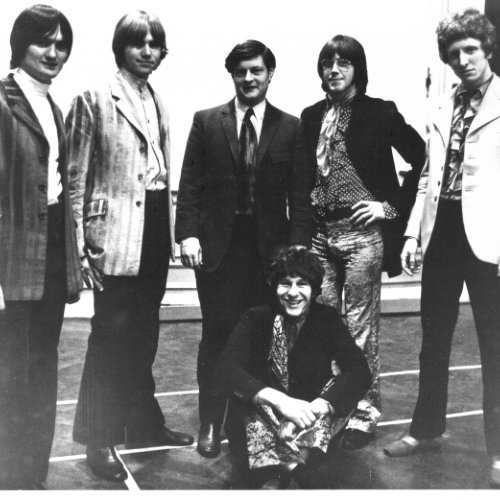


In alphabetical order:
Jeff Arundell (Bass) Martin Hester (Lead vocals) Simon Needler (Hammond Organ) Mark Pawley (Lead Guitar) George Schwyzer (Drums)
The players

A short but impressive list!
Never trust in tomorrow (John Schroeder) (Pye 7n17666 Rel. January 1969) C/w Easy to know (Simon Needler & Mark Pawley) Always be a part of my living (Guy Fletcher & Doug Flett) (Pye 7N17743 Rel May 1969) C/w Captain Reale (Simon Needler & Mark Pawley) Unreleased Acetate Captain Reale / Easy To Know [Jackson Studios 1968] BBC Radio Broadcasts: Sounds Like Tony Brandon 7th 11th April 1969 The Jimmy Young Show 5th - 9th May 1969 Sounds Like Tony Brandon 14th - 18th July 1969 The Dave Cash Programme 21st - 25th July 1969 The Dave Cash Programme 11th - 15th August 1969 The Terry Wogan Show 3rd - 7th November 1969 The Terry Wogan Show 24th - 28th November 1969 The Terry Wogan Show 29th December 1969 - 2nd January 1970
Discography & Broadcasting







© The members of Gentle Influence - 2012


Last updated 6th July 2013